
I brushed, flossed, scraped my tongue and gargled. Fifteen minutes later, my breath was already back.
If your hygiene is genuinely good and your breath still will not stay fresh, the reason may not be where you think it is. Here is what is actually going on.
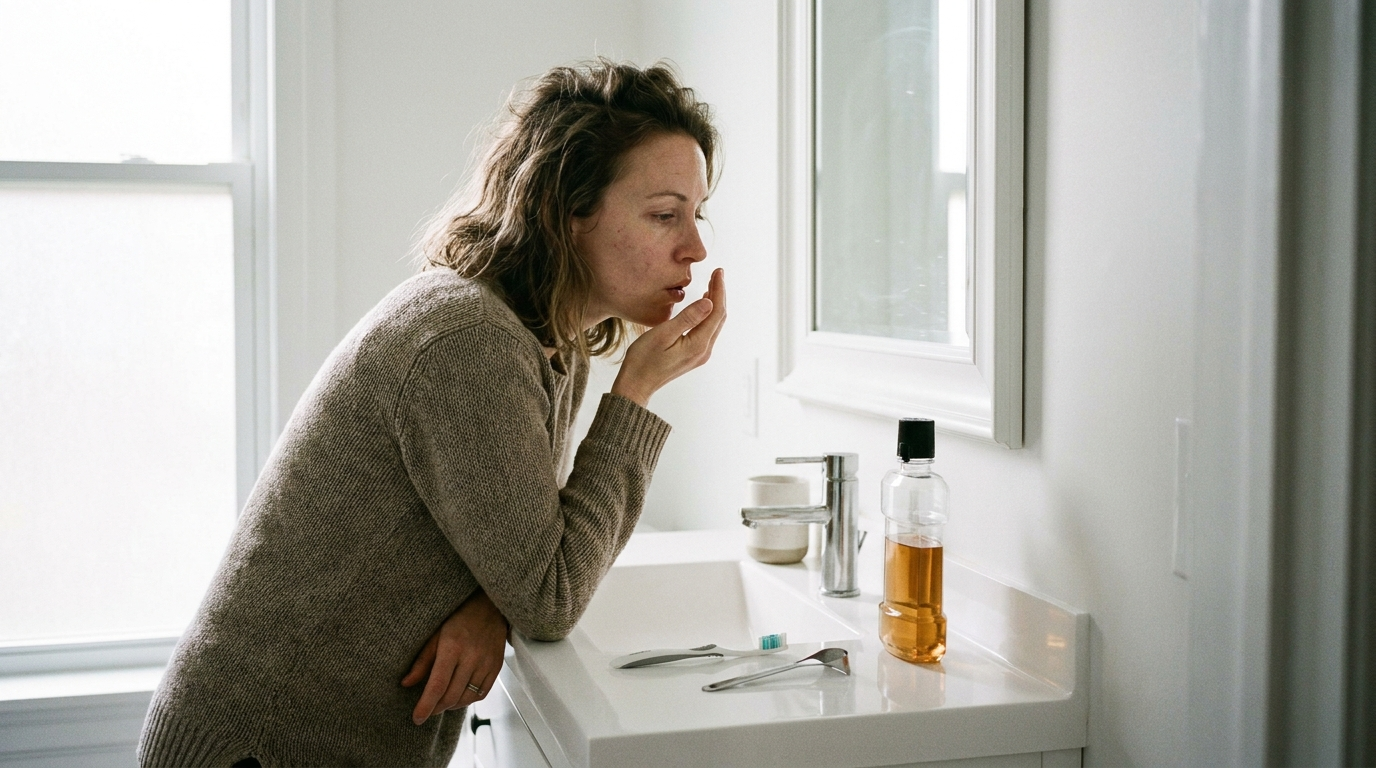
"I brush my teeth twice a day, floss, clean my tongue and gargle with Listerine, however I still have bad breath. Even the air that comes out of my nose smells bad."
a sufferer, halitosis forumI started timing it.
Brush, rinse, set a timer, breathe into a cupped hand. Fifteen minutes, give or take, and it was already back. I did that for weeks before I admitted what it meant.
Here is what bad breath that will not leave actually does to you. You stop trusting your own mouth. I brushed after every meal. I flossed like a hygienist was grading me. Two tongue scrapers, the metal kind. I gargled until my eyes watered. And the rebound came anyway, every single time, on roughly the same clock.
"Like many of you I now brush multiple times a day. So how is it that 2 minutes after brushing and flossing others are smelling something foul from one's mouth?"
Mayo Clinic forumYou cannot out-brush something if brushing was never reaching it.
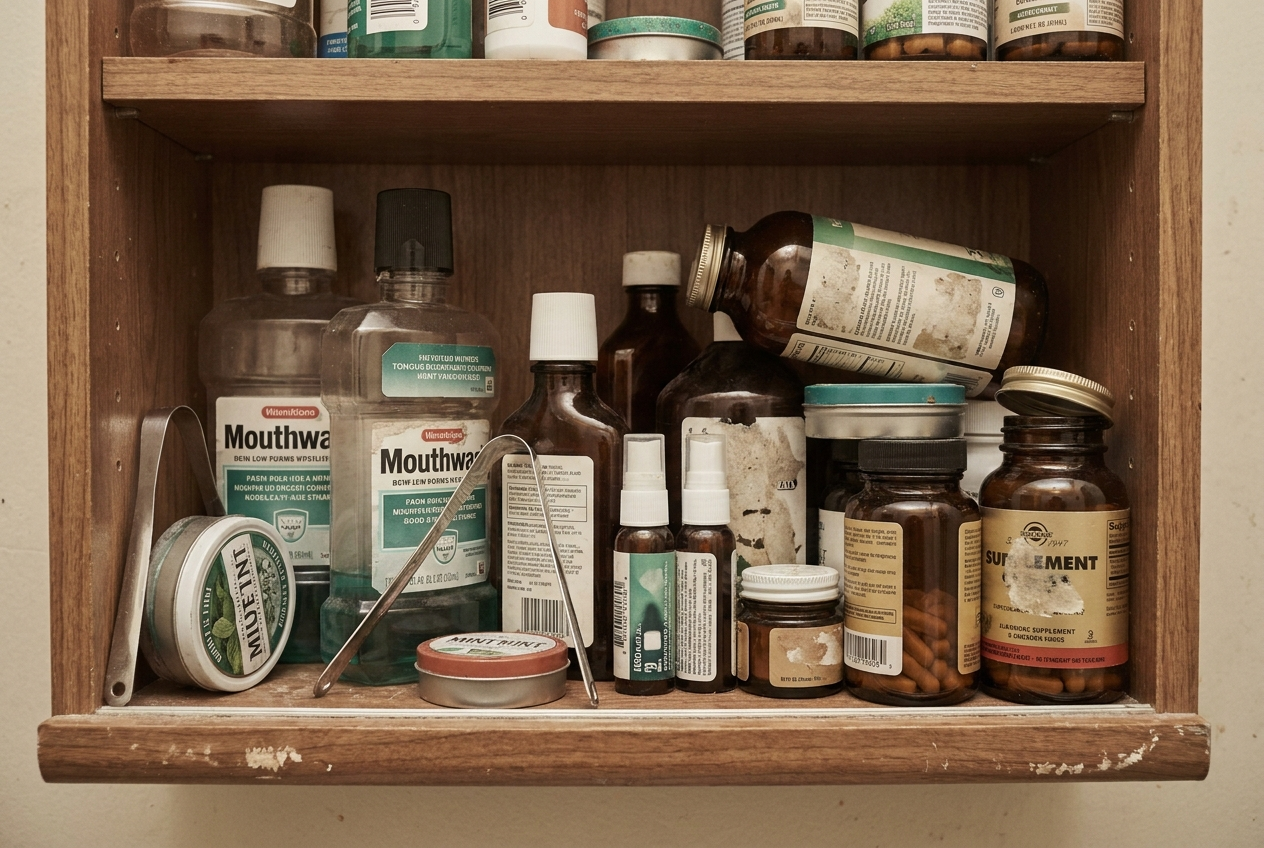
By year three, my bathroom cabinet was a graveyard.
Here is what I had tried, because if this looks like your cabinet, you are who I am writing for.
- Four mouthwashes. The alcohol one made it worse, which later made sense. Alcohol dries the mouth, and a dry mouth ferments faster.
- A water flosser.
- Three brands of probiotic mints. Six months of one of them.
- Two dentists, who both checked me and called my hygiene, their word, excellent.
- An ENT who looked up my nose and found nothing.
"I've gone off the natural supplements train. Bought and tried everything for years. All I ended up with was a cabinet full of bottles."
halitosis forumA cabinet full of bottles. That was me too. And here is the sentence it took me three years and too much money to reach: no amount of oral hygiene was going to fix it, because the problem was never a shortage of hygiene.
First, an honest filter
Is this your kind of bad breath?
Quick and honest, because it changes everything. There are really two kinds of bad breath.
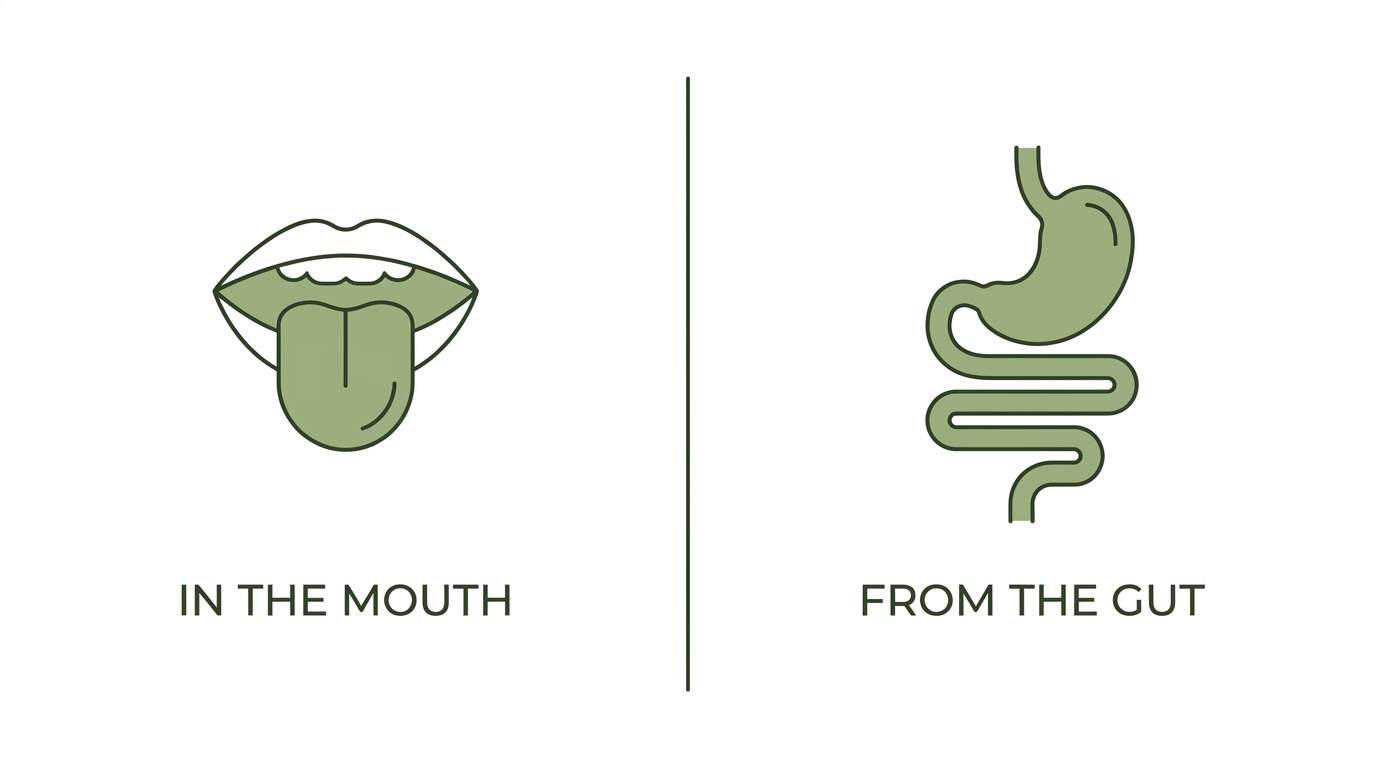
The first kind starts in your mouth: gum disease, a dry mouth, bacteria on the tongue. It is the common kind, and a good dentist clears it up. If you have not had a proper dental check recently, start there. A capsule is not the fix for that, and we are not going to pretend otherwise.
The second kind is the one that survives all of it. Your routine is genuinely good, the dentist looks and says your hygiene is excellent, and the breath still comes back. If that is you, you are not imagining it, and you are exactly who the rest of this page is written for.
- You brush, floss, scrape and rinse, and it still rebounds within the hour.
- A dentist already checked and found nothing wrong. That is the tell, not a dead end.
- Have not seen a dentist yet? Do that first, then come back if the breath outlasts a clean bill of health.
It is not really about breath. It is about the half-second.
If you have this, you know the half-second I mean. You are talking to someone, and the person jerks back, or leans away, or takes one small step they do not know they took.
"It has destroyed my self esteem and greatly affected my social life and career. Now I stay at a job I can do from home. I dread interviews and having this issue come up."
halitosis forumI stayed home too. I turned down the coffees. I got very good at the conversational distance that does not look like distance. None of that is vanity. It is just what you do when you cannot trust the air in front of you.
The reframe
Where the smell is actually coming from.
The smell itself is sulfur gas. Three compounds, hydrogen sulfide, methyl mercaptan and dimethyl sulfide, make up about 90 percent of what people register as bad breath.
In most people, those gases are produced in the mouth. That is why brushing and scraping work for them, and it is why most bad breath really is an oral problem.
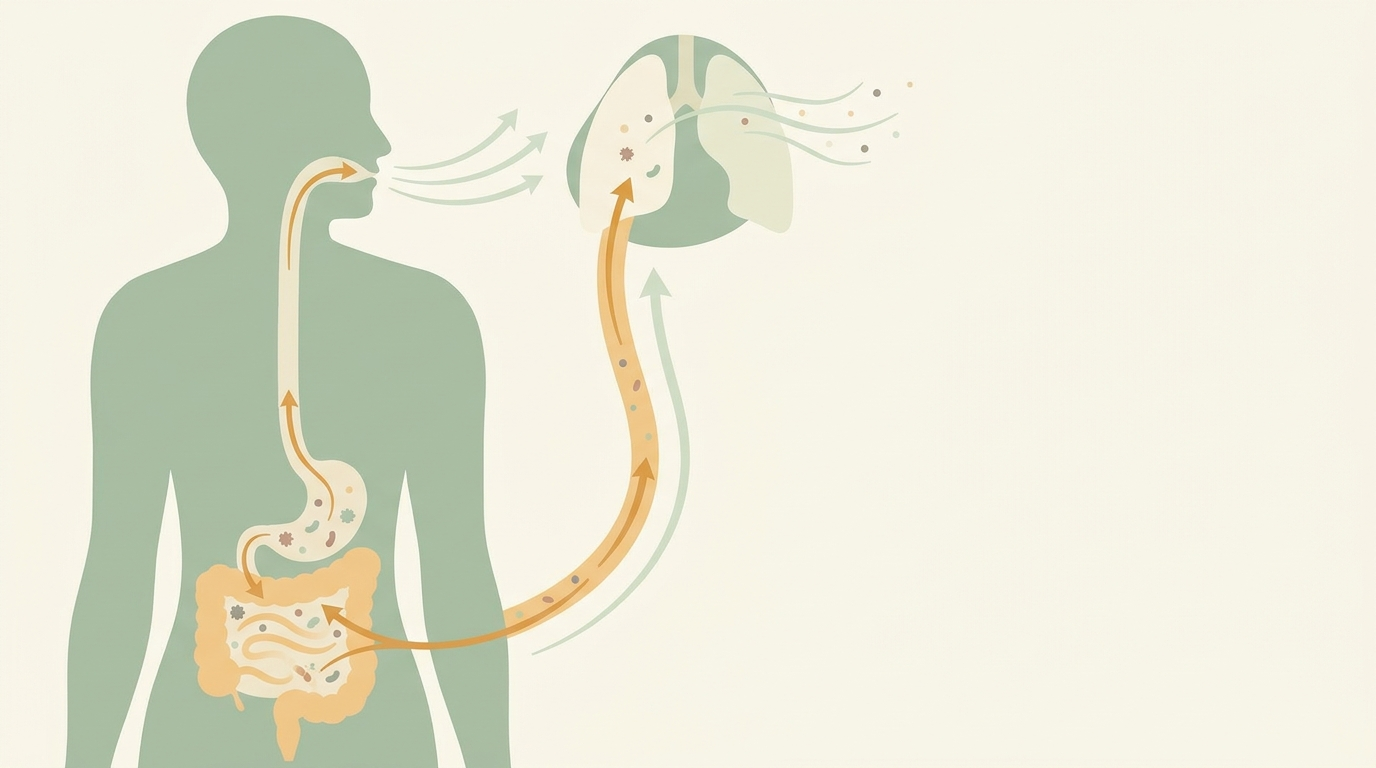
But in extra-oral cases, the same gases are produced lower down, by bacteria in the gut, then carried in the bloodstream and breathed out through the lungs. That is the part no mouthwash can reach. It was never in your mouth to rinse out. You clean the mouth, and a few minutes later the gas simply arrives again, from the inside.
The mechanism
If it comes from the inside, it has to be handled on the inside.
This is where chlorophyllin comes in. Think of it less like a breath freshener and more like a sponge moving through your gut.
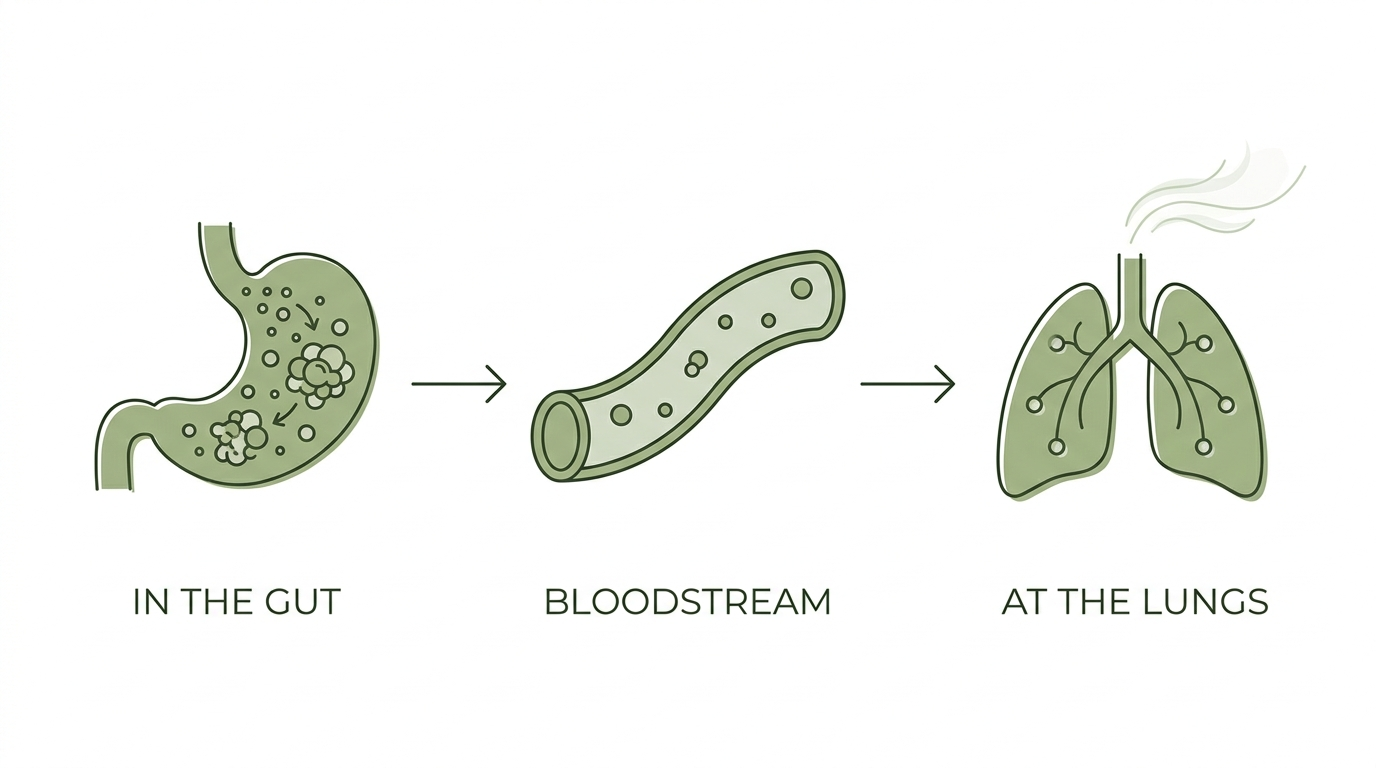
This is not a fringe idea. Sodium copper chlorophyllin is the only internal-odor active ingredient recognized in FDA OTC Monograph M026, and it has been used this way since the 1940s, when clinicians noticed it cut odor in patients and began giving it by mouth.
Two ingredients back it up. Parsley, shown to slow the growth of odor-producing bacteria. And peppermint, whose compounds have been measured in exhaled breath hours after a capsule is swallowed. One capsule, three jobs, all of them on the inside.
30-day money-back guarantee. One capsule daily.
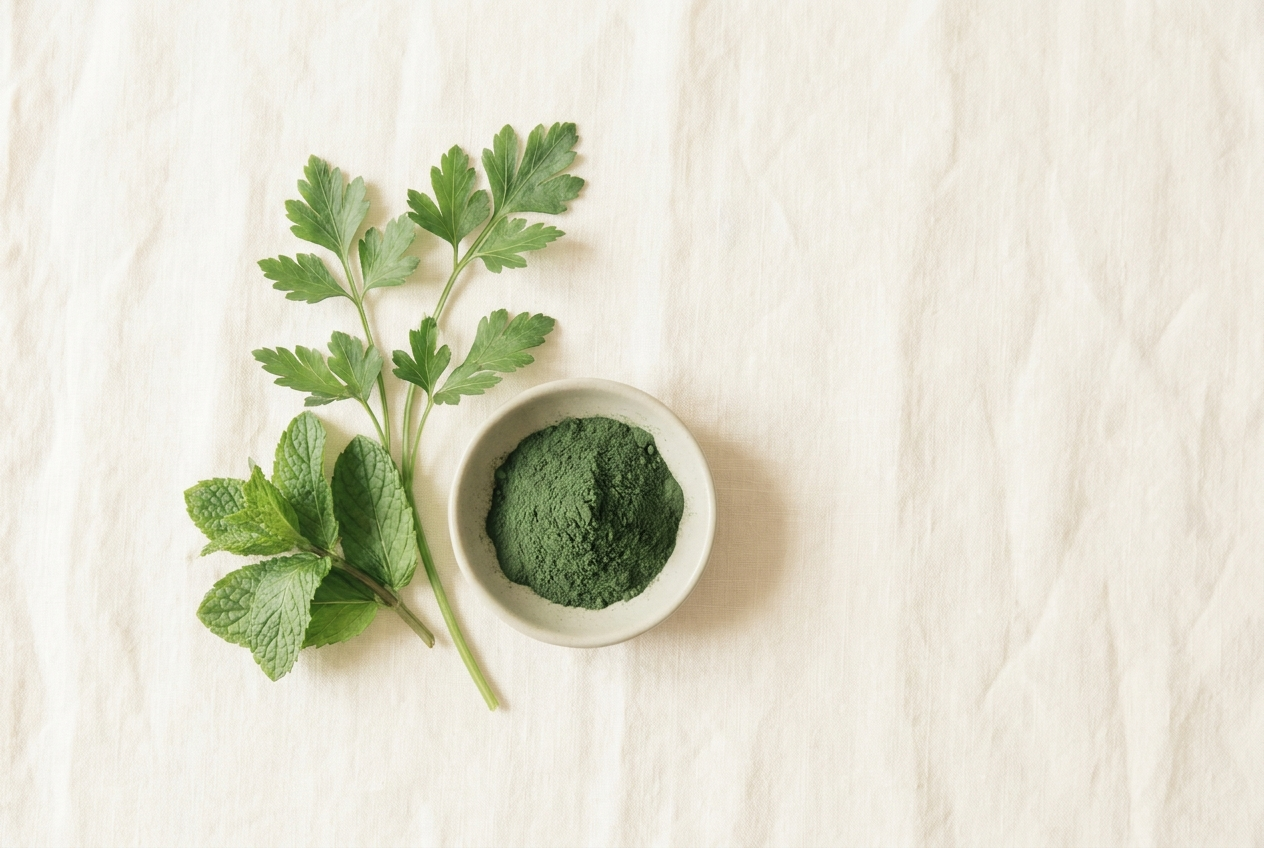
Three ingredients. One capsule. Each doing one job.
Sodium Copper Chlorophyllin
The one that matters most, and the only internal-odor active ingredient recognized in FDA OTC Monograph M026. It binds sulfur compounds in the digestive tract so fewer reach the bloodstream. A 2004 study found 180 mg a day measurably lowered one of those compounds.
Organic Parsley Leaf
Not garnish here. Parsley essential oil has measured activity against bacteria, slowing the growth of the ones producing the odor. Chlorophyllin binds what is already made. Parsley works one step upstream.
Organic Peppermint Leaf
The part you will notice. After a peppermint capsule is swallowed, its compounds have been confirmed in exhaled breath hours later. It also has antibacterial activity against common gut bacteria.
Why 200 mg
If a chlorophyll supplement did nothing for you before, this is probably why.
In 1989, researchers ran a proper double-blind trial of chlorophyll tablets at 75 mg, three times a day. At that dose, the effect did not differ from placebo.
That study is real, and it is not a flattering one for a chlorophyll brand to bring up. We are pointing you at it because it is the single best explanation for why the chlorophyll product you may have already tried did nothing for you. It was underdosed.
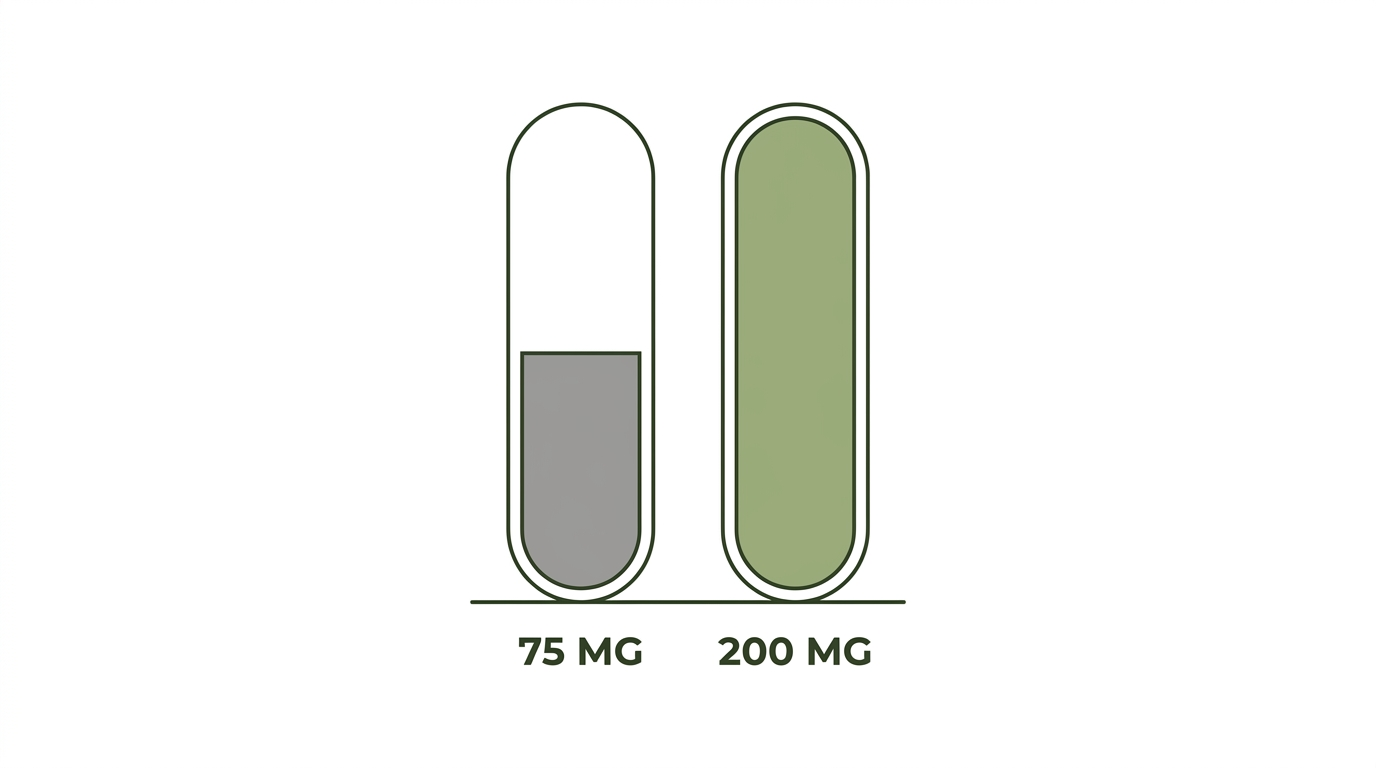
The Linus Pauling Institute documents the historically effective range for sodium copper chlorophyllin as 100 to 200 mg a day. That is the entire reason this formula is 200 mg per capsule. Not 75. The top of the range the science actually supports.
There is already an FDA-approved internal deodorant in the same monograph category, Devrom, used mostly for ostomy odor. The category is real and decades old. It simply never had a version built for the everyday sufferer with a clean routine and a fifteen-minute rebound.
Why this is not just another thing for the cabinet.
A plain comparison. No competitor named, no competitor insulted.
| TheInnerCo | Mouthwash | Mints & gum | Tongue scraper | |
|---|---|---|---|---|
| Where it works | The gut, where extra-oral compounds form | Surface of the mouth | Surface of the mouth | Surface of the tongue |
| Reaches extra-oral sulfur compounds | Yes | No | No | No |
| Masks the smell or works on the source | Works on the source | Masks, then fades | Masks, then fades | Removes film, film returns |
| Needs reapplying through the day | No, one capsule | Yes | Yes | Yes |
| Built around a mechanism, not a cover-up | Yes | No | No | No |
The point is not that mouthwash or scraping are useless. They handle the oral side, which is most cases. For the extra-oral 5 to 10 percent, they were simply never built to reach it.
What the first month actually looks like.
Chlorophyllin works gradually. It binds compounds as they are produced, so the change builds rather than switching on. This is what most people describe, and your timing may differ.
- Week 1Early daysLittle to notice yet. The ingredient is reaching the digestive tract and starting to bind sulfur compounds. This is the stage where underdosed products quit and people give up too early.
- Weeks 2 to 3The rebound softensThe more common point where people report the gap between brushing and the smell coming back getting longer.
- Week 4 and beyondThe point to judge itOne capsule daily, given a consistent month. If nothing has shifted by then, that is what the guarantee is for.
This is a mechanism, not a switch you flip. It rewards consistency.
What is in the capsule, and what we are not going to do.
Supplement Facts
30 capsules. 30-day supply. One capsule daily.
Why you will not see a wall of five-star reviews on this page.
Most pages in this category show a hundred glowing testimonials and a doctor in a white coat. A lot of that is not real. We would rather show you what is.
What is real: TheInnerCo has sold more than 100,000 bottles to customers across the US, UK, Canada and beyond. The active ingredient sits in an FDA OTC monograph. The studies behind it are cited at the bottom of this page, with live links. Every order is backed by a 30-day money-back guarantee. Fewer fireworks, more of what you can actually check.
The guarantee, plainly: take it for 30 days. If your breath does not change, contact the team within 30 days of delivery and you get your money back.
Questions, answered straight.
How long before I notice anything?
Is it safe? Any side effects?
I tried a chlorophyll supplement before and it did nothing.
How is this different from mouthwash or mints?
When do I take it?
Is this FDA approved?
What if it does not work for me?
If the fifteen-minute rebound is your life, this was built for you.
You have brushed. You have flossed. You have scraped, rinsed, chewed and seen the dentist who told you everything looked fine. None of that was wrong. It just was not reaching the part of the problem that lives past your mouth.
One capsule a day, at the dose the research actually points to. Thirty days to feel whether it is doing anything, and your money back if it is not.
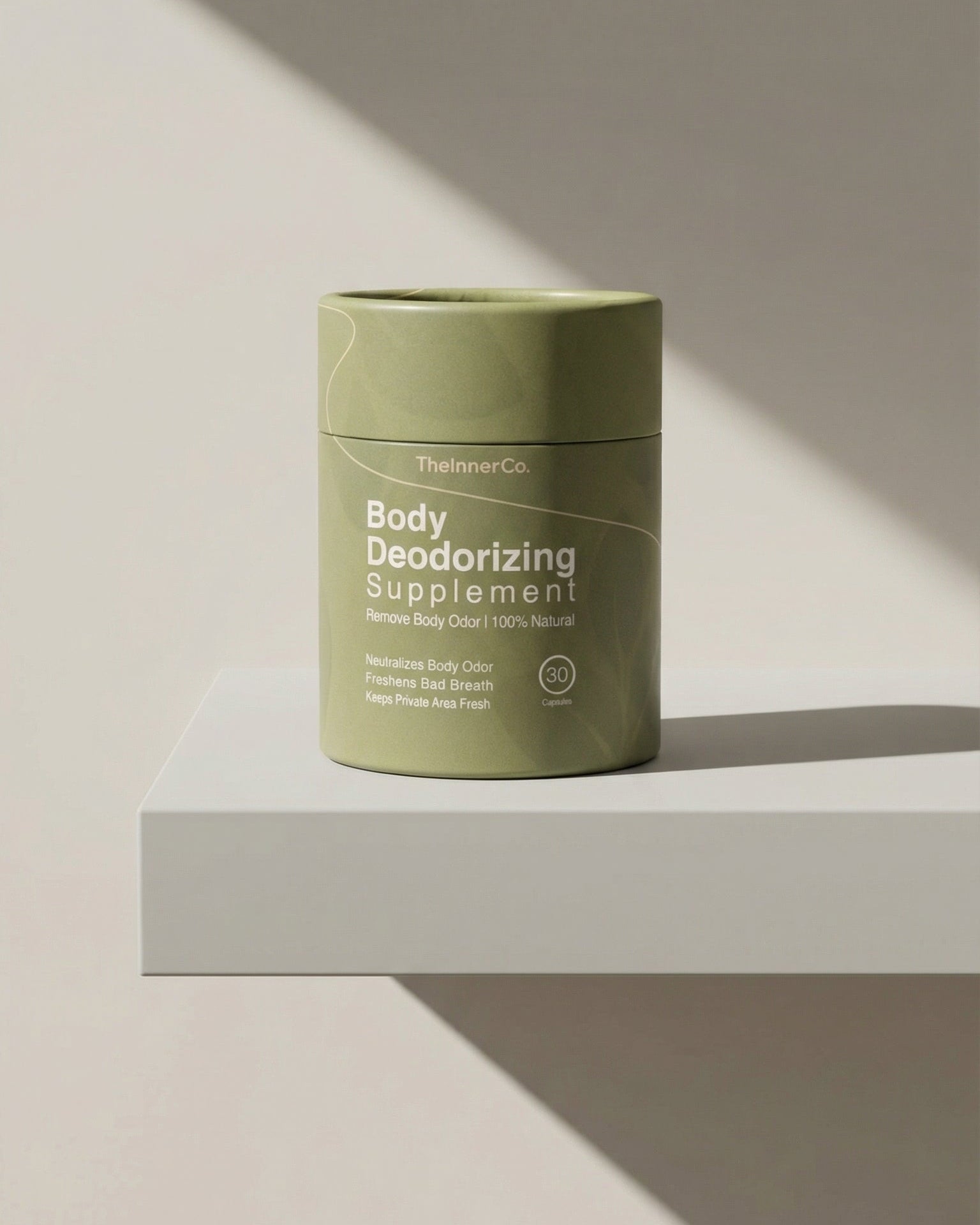
TheInnerCo, for breath that comes back after a good routine
- Works at the source in your gut, not the surface of your mouth
- One capsule a day, no mints, no mouthwash, no routine overhaul
- 30 capsules, a full 30-day supply
30-day money-back guarantee. Ships worldwide. Price shown in your currency at checkout.